Best Lab Countertop Material
Table of Contents
Best Lab Countertop Material refers to the surface best suited for educational laboratories, balancing durability, chemical resistance, moisture protection, repairability, and cost efficiency to support daily classroom use. For most schools, properly sealed wood countertops deliver the ideal combination of performance, longevity, flexibility, and visual warmth without the expense of heavy industrial materials.
What Matters Most When Choosing Lab Countertop Material
Safety at the Work Surface
In a classroom laboratory, countertops are the front line of safety. Students place chemicals, glassware, heating equipment, and project materials directly onto these surfaces every day. The right material must resist spills, stains, etching, and heat exposure while preventing absorption that could lead to hidden contamination. A safe surface isn’t optional—it supports proper classroom procedures and protects students and staff from unnecessary hazards. Planning resources shared on the CampbellRhea blog often emphasize that classroom countertops should be selected for real teaching conditions, not commercial or industrial extremes.
Durability Under Student Traffic
Unlike controlled research environments, classrooms experience unpredictable use. Heavy backpacks hit cabinet edges, stools drag across surfaces, and equipment shifts regularly between lab sessions. Countertops must resist abrasion, impact, and surface wear to avoid cracking, chipping, or finish degradation that can compromise safety over time. Schools comparing various surface options frequently examine long-lasting performance features outlined in CampbellRhea’s product offerings to determine which materials continue to perform under constant student activity.
Moisture Resistance & Daily Cleanability
Classroom labs encounter constant moisture exposure—from handwashing stations to routine cleaning with disinfectants. Countertops must remain stable even when wet, resisting swelling, staining, or microbial buildup. Easy sanitation also matters; smooth, sealed surfaces reduce cleanup time for staff while maintaining hygienic learning spaces. Schools evaluating moisture-stable materials often focus on classroom-optimized solutions such as CampbellRhea’s educational wood systems engineered with finish coatings specifically designed to protect against routine water exposure.
Balancing Budget With Lifecycle Value
Budget pressures can push districts toward low-cost materials that appear affordable in year one but prove expensive over ten. Low-grade surfaces scratch easily, delaminate, or stain permanently—leading to early replacements. Long-term value comes from choosing materials with repairable finishes that maintain function without full surface replacement. Real-world cost-efficiency comparisons are often illustrated across completed projects showcased in CampbellRhea classroom portfolios, where facilities demonstrate how investing in durable surfaces reduces total ownership costs.
Aligning Performance to Educational Use
The best lab countertop material doesn’t come from industrial supplier catalogs—it comes from understanding classroom workflows. Educational labs rarely demand the extreme chemical tolerances required in heavy research or manufacturing facilities. Instead, they need surfaces that balance durability, moisture resistance, ease of repair, and everyday usability without driving up unnecessary costs. Schools sourcing the right fit often consult with specialists through the CampbellRhea dealer network or begin their selection process directly with CampbellRhea to ensure materials are matched to classroom needs—protecting students while maintaining cost-efficient, long-term performance.
Common Lab Countertop Materials & Their Roles
Epoxy Resin — High-Intensity Chemical Labs
Epoxy resin countertops are used in environments where exposure to strong acids, solvents, and direct heat is routine. These solid surfaces withstand burners, corrosive spills, and sterilization chemicals without warping or staining.
Typical Uses
- Advanced chemistry labs
- Research environments
- Prep rooms with open-flame testing
Considerations
- Higher material cost
- Heavy installation requirements
- Often unnecessary for general classrooms
Facilities evaluating full-lab industrial systems typically review epoxy options alongside broader furniture selections in CampbellRhea’s laboratory surface lineup to ensure proper performance scaling.
Phenolic Resin — General Teaching Labs
Phenolic resin offers a lighter, more affordable alternative to epoxy for classrooms that utilize moderate chemicals and water-based experiments. It handles routine spills and disinfectants well while maintaining a streamlined installation profile.
Common Environments
- Biology classrooms
- Middle and high school general science labs
- Test and demonstration stations
Key Strengths
- Good chemical and moisture resistance
- Lower cost than epoxy
- Easier handling during renovation projects
Stainless Steel — Medical & Wash-Down Labs
Stainless steel countertops excel where sterility is the top priority. Their non-porous surfaces clean easily and tolerate aggressive disinfecting protocols.
Ideal For
- Medical labs
- Clinical training rooms
- Food safety or wash-down spaces
Limitations in Schools
- Easily scratched and dented under mechanical wear
- Higher installation cost
- Less comfortable for student learning spaces
Due to the unique maintenance demands, stainless surfaces rarely appear outside of specialized programs and controlled medical environments.
Wood Countertops — Classroom-Centered Performance
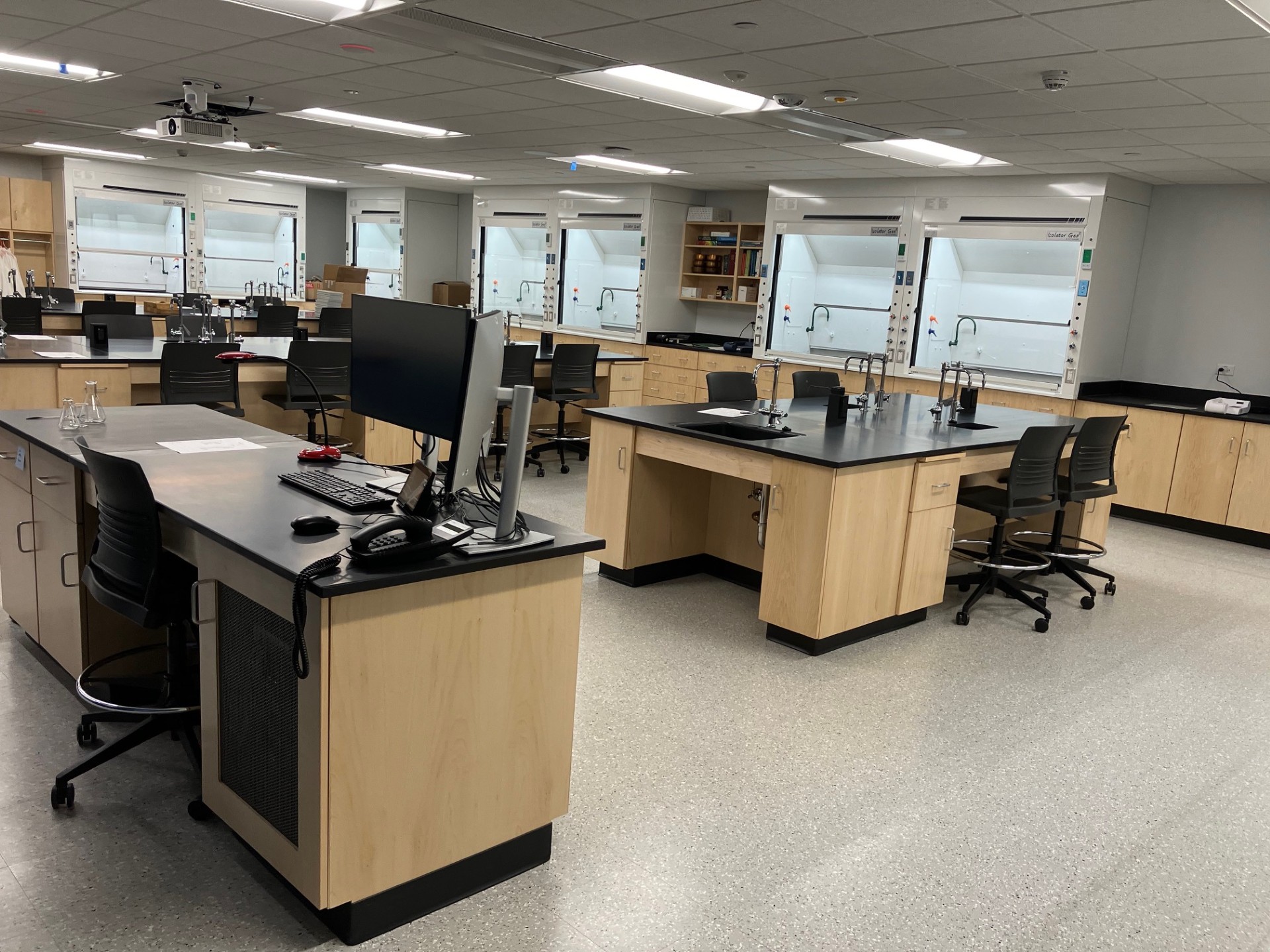
For the majority of educational labs, wood countertops provide the most balanced solution. They are engineered for durability under heavy student use while offering repairable finishes that extend service life without full replacement.
Best Applications
- Teaching laboratories
- STEM classrooms
- Prep rooms and demonstration stations
Advantages
- Resistant to surface abrasion and routine moisture
- Refinishable for long-term sustainability
- Lighter structural load than industrial materials
- Warmer appearance that supports inviting learning environments
Schools researching adaptable classroom surface systems often begin with CampbellRhea’s educational wood solutions designed specifically for high-use instructional settings.
Why Wood Works for Most Schools
Unlike research labs, educational classrooms require countertops that balance durability and comfort—without the costs associated with industrial-grade materials. Wood fulfills that role by:
- Maintaining strong resistance to everyday wear
- Supporting long-term refinishing and repair programs
- Preserving flexible furniture layouts for evolving curricula
Completed installations demonstrating wood countertop effectiveness can be reviewed through CampbellRhea’s classroom project portfolio, while deeper planning strategies are shared regularly on the CampbellRhea blog.
Selecting the Right Surface Partner
Schools evaluating countertop upgrades benefit from working directly with classroom furniture specialists who understand educational performance demands. Local consultation options are available through the CampbellRhea dealer network, or districts can initiate material planning directly with CampbellRhea to ensure countertop selection aligns with both curriculum needs and long-term stewardship goals.
Why Wood Works Best in Educational Classrooms
Built to Withstand Student Use
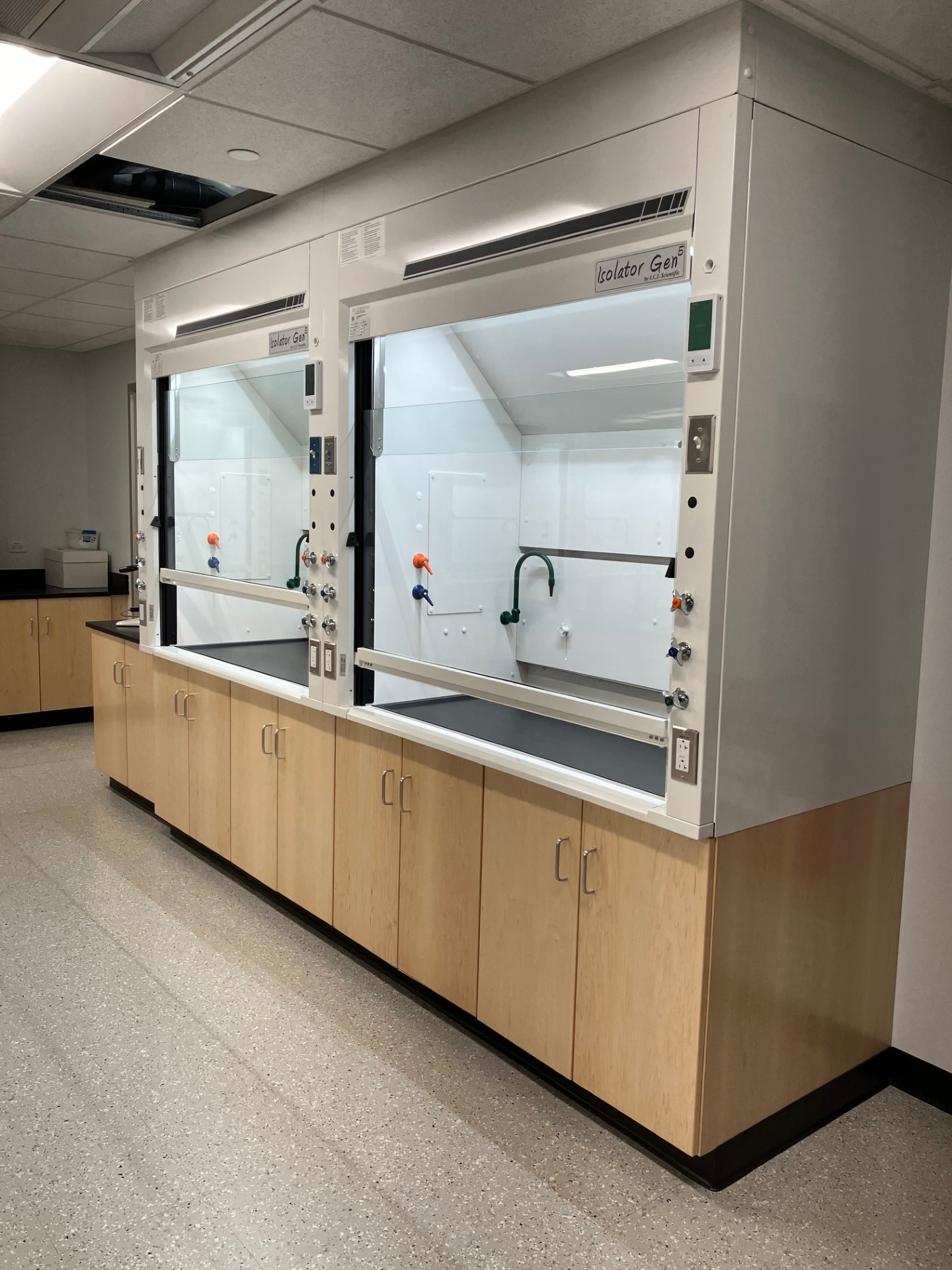
Wood countertops engineered for laboratory environments are far from basic classroom furniture. These surfaces are designed to handle constant student activity—equipment movement, heavy backpacks placed on benches, and day-to-day abrasion—without compromising structural integrity. Reinforced substrates and sealed surface treatments create a durable work surface that maintains performance year after year. Schools evaluating real classroom installations often reference CampbellRhea’s completed project galleries to see how wood systems perform under heavy instructional use.
Repairable Finishes = Longer Lifespan
One of wood’s greatest advantages is its ability to be refinished rather than replaced. Dings, scratches, or finish wear can be repaired on site, extending countertop service life dramatically and reducing the need for expensive surface tear-outs.
Lifecycle benefits include:
- Lower long-term material costs
- Reduced classroom downtime during repairs
- Minimal disruption to instruction schedules
Maintenance best practices and finish care guidance are frequently highlighted through CampbellRhea’s classroom planning blog.
Lightweight Installation & Structural Efficiency
Compared to epoxy resin or stainless steel surfaces, wood countertops impose far less load on cabinetry and existing building structures. This simplifies retrofits in aging school facilities where floor-load capacity or structural reinforcement is limited.
Installation advantages:
- Faster setup timelines
- Reduced freight and handling costs
- Compatibility with mobile and modular bench systems
Technical system specifications are available across CampbellRhea’s classroom furniture collections.
Cost Efficiency vs. Industrial Materials
Most classrooms do not require extreme heat or chemical resistance. Purchasing industrial-grade surfaces often leads to overpaying for unnecessary capacity. Wood surfaces provide the correct durability range for education while offering meaningful cost savings in:
- Initial material procurement
- Installation labor
- Long-term repairs and maintenance
Detailed classroom-focused options are showcased within CampbellRhea’s educational wood systems designed to match real teaching environments rather than industrial laboratories.
Aesthetic Warmth & Learning Comfort
Warm wood finishes improve classroom perception by creating inviting spaces rather than sterile environments. Students respond better to rooms that feel comfortable for collaboration, while teachers benefit from layouts that blend functionality with visual calm.
Educational design advantages include:
- Reduced visual sterility
- Improved classroom ambiance
- Increased student engagement
Design teams sourcing furniture projects that balance form and function often begin discussions through CampbellRhea as a dedicated education specialist.
Flexibility for Changing Classroom Needs
Wood countertops integrate seamlessly into modular benches, mobile workstations, and reconfigurable labs. This adaptability allows classrooms to evolve alongside curriculum changes without complete furniture replacement cycles.
Educators and facilities staff developing adaptable learning environments frequently consult experts via the CampbellRhea dealer locator to specify wood systems compatible with present classroom needs and future STEM expansion.
Right Performance — Not Overengineering
K–12 and most higher-education labs do not operate under industrial chemical or thermal loads. When paired with sealed finishes and classroom safety compliance standards, wood provides the optimal performance balance—durable enough for daily instruction yet cost-effective and flexible compared to heavy industrial alternatives.
Why CampbellRhea Is the Trusted Source for Wood Lab Countertops
Over 70 Years of Classroom-Focused Experience
CampbellRhea has spent more than seven decades developing laboratory furniture specifically for educational environments—not adapting products built for industrial labs. Their specialization allows every countertop and casework system to reflect how classrooms function daily: high traffic, frequent equipment movement, and varied teaching needs. Facilities planning teams often gain early design insights through CampbellRhea’s project strategy blog when evaluating long-term classroom furniture investments.
Classroom-Engineered Materials & SEFA Compliance
Wood countertops from CampbellRhea are engineered for education performance standards, incorporating:
- Chemical-resistant sealed finishes designed to withstand classroom reagents and disinfectants
- Reinforced cabinet support structures that prevent sagging or substrate deflection over time
- SEFA-compliant construction standards ensuring load capacity, durability, and safety verification
Unlike off-the-shelf furniture solutions, specifications across their laboratory systems are documented within CampbellRhea’s full product catalog, allowing schools to plan installations based on verified classroom engineering criteria.
Purpose-Built Educational Wood Systems
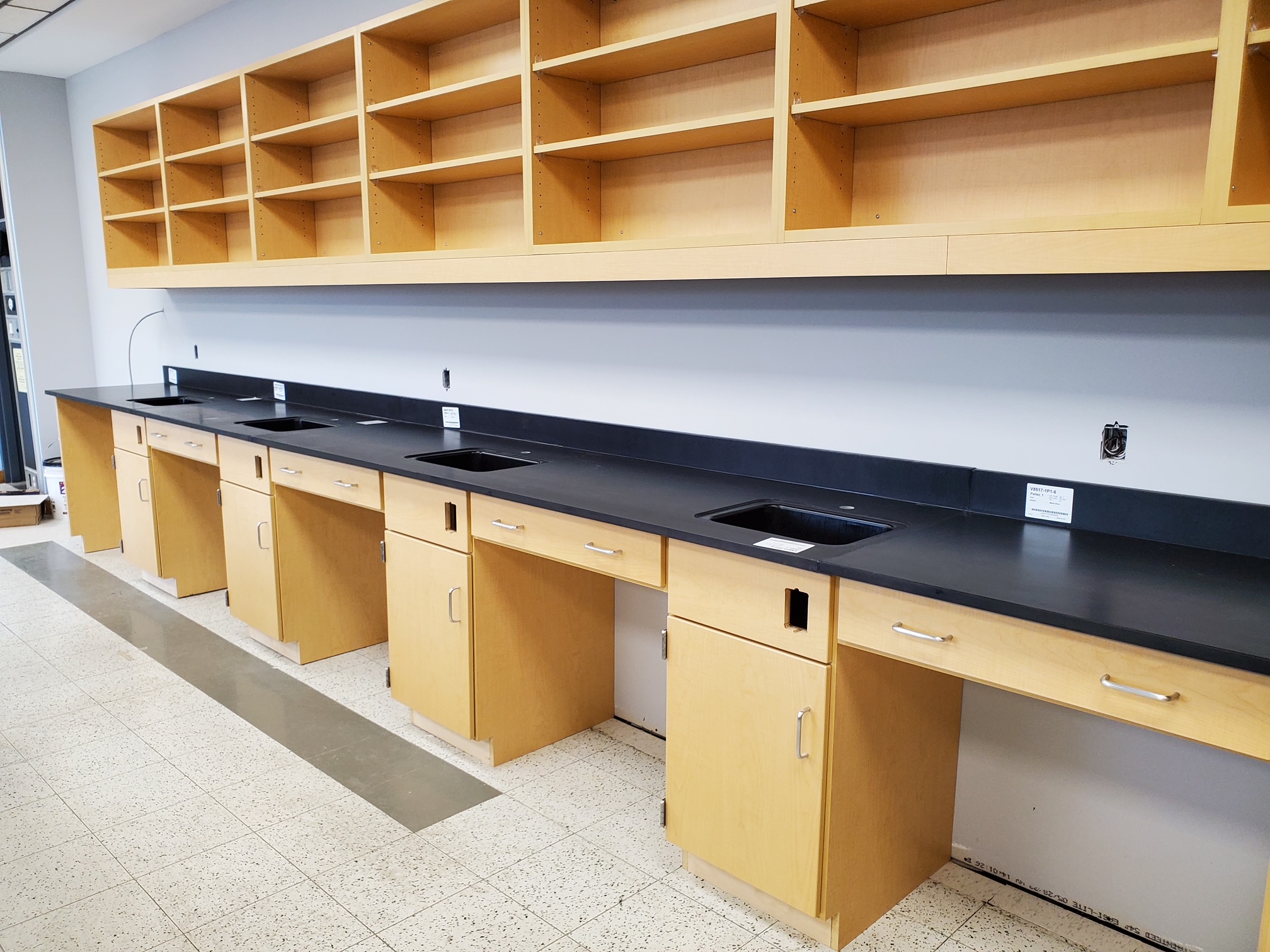
CampbellRhea’s wood countertop solutions are part of fully integrated furniture systems created specifically for instruction-based laboratories. These systems balance durability, maintainability, and aesthetic warmth while maintaining compliance with education safety standards. Schools selecting these surfaces rely on the proven performance of CampbellRhea Educational Wood Casework to deliver consistent results across teaching labs, prep rooms, STEM classrooms, and collaborative learning environments.
Complete End-to-End Design Services
CampbellRhea’s role extends far beyond supplying surfaces. Their comprehensive project approach includes:
- Custom wood countertop fabrication
- Complete lab furniture packages
- Mobile and modular workstations
- Integrated safety storage and fume hood systems
- Professional layout planning with AutoCAD and BIM tools for space optimization and conflict avoidance
Examples of this integrated delivery model can be found within CampbellRhea’s classroom installation portfolio featuring laboratories built for durability and flexibility.
Trusted Supplier Networks & Local Support
To ensure successful classroom implementation, CampbellRhea works through certified regional specialists who manage specification, installation, and after-install service. Schools connect directly with experienced project partners using the CampbellRhea dealer locator to receive localized advice backed by national manufacturing support from CampbellRhea.
Built for the Classrooms of Tomorrow
By uniting over 70 years of educational expertise, SEFA-compliant craftsmanship, U.S.-based wood manufacturing, and comprehensive planning services, CampbellRhea delivers laboratory environments that remain effective for decades. Their wood countertop systems create safe, warm, durable, and future-ready classrooms built specifically to support evolving instruction—without forcing schools to adopt industrial surface solutions that exceed real educational needs.
Related searches
Best countertop for science classrooms
Wood laboratory countertops
Epoxy vs phenolic lab countertops
Chemical resistant countertops for schools
SEFA standards for lab countertops